
T Levels are two-year technical programmes designed with employers, to give young people the necessary skills that industries need, here at HoW we can help you with all you need to know about starting at T Level or supporting a T Level placement.
The T stands for Technical and they will be taken after GCSE and will be the equivalent of 3 A levels. They have been developed in conjunction with employers and business to address the potential skills shortages in the future and will take 2 years to complete.
The aim of the T Level is to provide the students with practical skills and knowledge in their chosen industry alongside core English, Maths and digital skills with the addition of a minimum 315 hours (45 days) of meaningful industry placement with an employer. If you are an employer who is looking at nurturing your future workforce, then you may like to consider offering an Industry Placement to one or more of our T Levels students.
HoW College currently offers the following T-Levels:
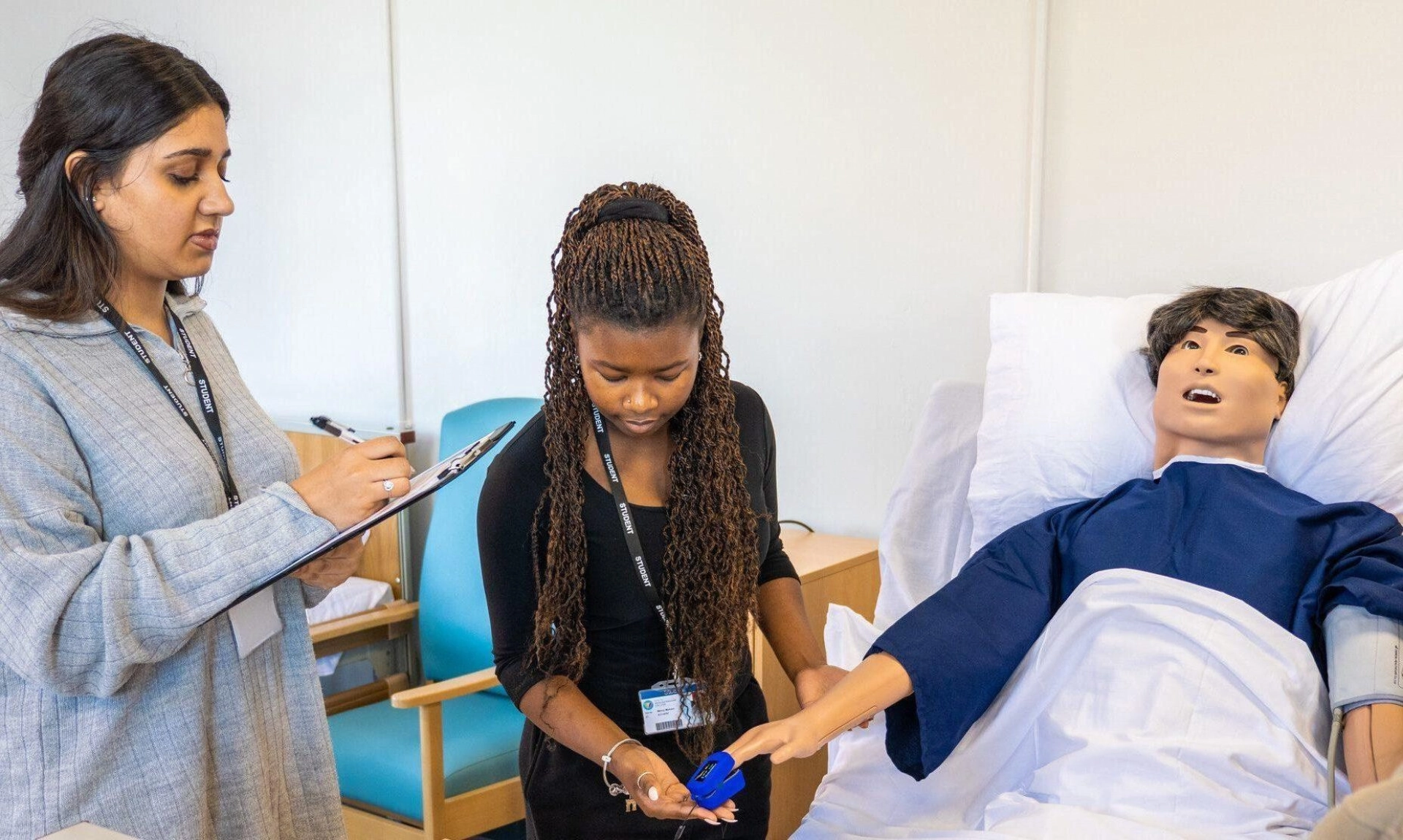
T-Level Technical Qualification in Education and Early Years
This T level develops the skills and knowledge needed for a rewarding career as an early years practitioner or primary school teacher through this new T level qualification.
This two year course covers all aspects of children’s learning and development, with a 750 hour industry placement providing valuable practical experience to support your chosen career aspirations.
More information can be found by contacting Bridget Robinson: [email protected]
T Level in Digital Software Development
This T-Level is aimed at learners who want to be software developers. The two-year course covers best practices in software design & development, how businesses work and how developers help support business functions. Learners also look at the ethical issues surrounding their role as well as legislative awareness and where the industry is moving with emerging technologies.
The occupational specialism allows learners to gain competency in their field through a practical project based on a specific user/customer scenario. During this, learners work through the development processes that form the cornerstone of this vital arm of the digital industry, from planning & analysis through to development of a prototype, testing & evaluating how effective their solution is in meeting the customer’s need.
More information can be found by contacting Bridget Robinson: [email protected]
T Level in Digital Support and Security
This T level develops the core knowledge and skills that are needed for entry to a range of digital occupations.
In Year 1 students will develop a general understanding of digital, but will also learn about topics specific to digital support services, including typical job roles and communication methods within the sector, fault analysis and problem resolution. Year 2 gives students the opportunity to specialise in digital support by applying cyber-security procedures and controls; learning how to install, configure and support operating systems and software applications; and how to discover, evaluate and apply reliable sources of knowledge.
More information can be found by contacting Bridget Robinson: [email protected]
The industry placement will allow you as the employer to develop new talent and get young people work ready as well as bringing other benefits:
Can help with entry-level recruitment and reduce recruitment costs
Develops current staff in their mentoring and management skills
Young people can often bring a new perspective into a workplace
A placement may provide that extra help with projects
It’s a great way of supporting your local community which brings its own benefits.
Increase diversity within your organisation.
If you feel you would like to find out more about offering industry placement or partnering with the college to support our learners find out more about your business, please contact Bridget Robinson via [email protected]
The T Level sits alongside A levels and apprenticeships providing choices for young people:
T Level – Technical qualification with 80% in a classroom environment and 20% in workplace environment.
Apprenticeship – Training ‘on the job’ for those who like the idea of 80% in the workplace and 20% in a classroom environment.
A Level- Academic route
Other vocational courses not following T Level.
Each subject area has a Work Experience Job Coach (WEJC) who work closely with the curriculum teams and students. They are knowledgeable and there to answer any questions and provide support throughout a placement to employers.
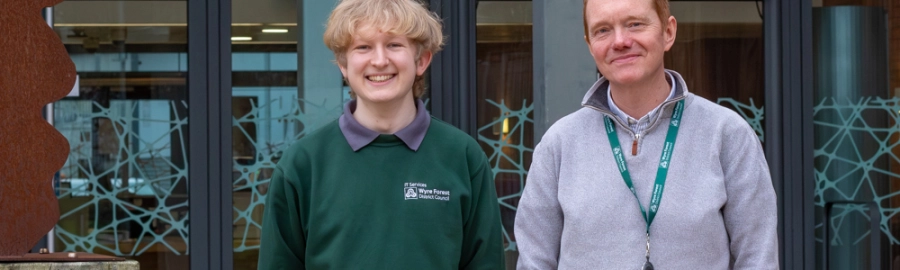
Harry Larner - T Level in Digital Support Services
Here what Harry Larner says about his time on the T Level in Digital Support Services:
What is great about doing a T Level?
One of the best things about doing a T Level is how it combines classroom learning with real-world experience. Unlike other qualifications, T Levels are designed with employers, which means the content is focused and relevant to the industry. For example, in Digital Support Services, I’ve gained specialised knowledge and skills that directly prepares me for roles like Network Engineer or Helpdesk Technician. The course also includes a substantial industry placement, giving you a real taste of working life and helping build your confidence. It’s a great way to learn practical skills while still gaining a recognised qualification that opens doors to university, apprenticeships, or employment.
How has working on your placement supported your development?
My placement has been a key part of my development. It’s given me the chance to apply what I’ve learned in the classroom to real situations, helping me understand how digital support works in a professional environment. I’ve developed important soft skills like communication, creativity, and critical thinking, and I’ve become more confident in handling tasks independently. The experience also allowed me to meet professionals in the field, giving me valuable insights and advice that have helped shape my career goals.
Would you recommend a T Level to students looking at their career choices?
Yes, I would definitely recommend a T Level to students who are thinking about their future careers. It’s ideal for those who want a mix of academic learning and hands-on experience. The structure of the course means you’re not just studying; you’re preparing for a specific job role. Employers value T Levels because they know students have had real-world training and understand the demands of the workplace. It’s a great way to get ahead, especially if you already have a clear idea of the industry you want to work in.
What top tips would you give to people looking to complete a T Level?
My top tips for anyone starting a T Level would be to make the most of your placement: ask questions, take initiative, and treat it like a real job. Stay organised and manage your time well, especially when balancing coursework with placement tasks. Be proactive by exploring extra resources like online courses or certifications. Reflect regularly on what you’re learning and how it connects to your career goals. Finally, build relationships with mentors and professionals during your placement; they can offer support, guidance, and even future opportunities.